
Baby Not Feeding + Fewer Wet Diapers: When to Seek Urgent Care (Newborn–6 Months) | Dr. Rawan Demachkie
Fast decision guide • Parent checklist • Clinic-focused • Evidence-based
Baby Not Feeding + Fewer Wet Diapers: When to Seek Urgent Care (Newborn–6 Months)
When feeding drops and wet diapers decrease, your baby can become dehydrated faster than you expect. This page gives you a clear plan: what counts as “concerning,” what to track for a faster clinic visit, and when you should go to the ER.
Fast rule: If your baby is very sleepy, breathing hard, not keeping fluids down, or has very few wet diapers, do not wait at home. Seek urgent medical evaluation.

Quick decision (read this first)
- If your baby is under 3 months and feeding drops significantly, get medical advice urgently.
- If your baby has very few wet diapers, looks very sleepy, or has breathing trouble, go to the ER now.
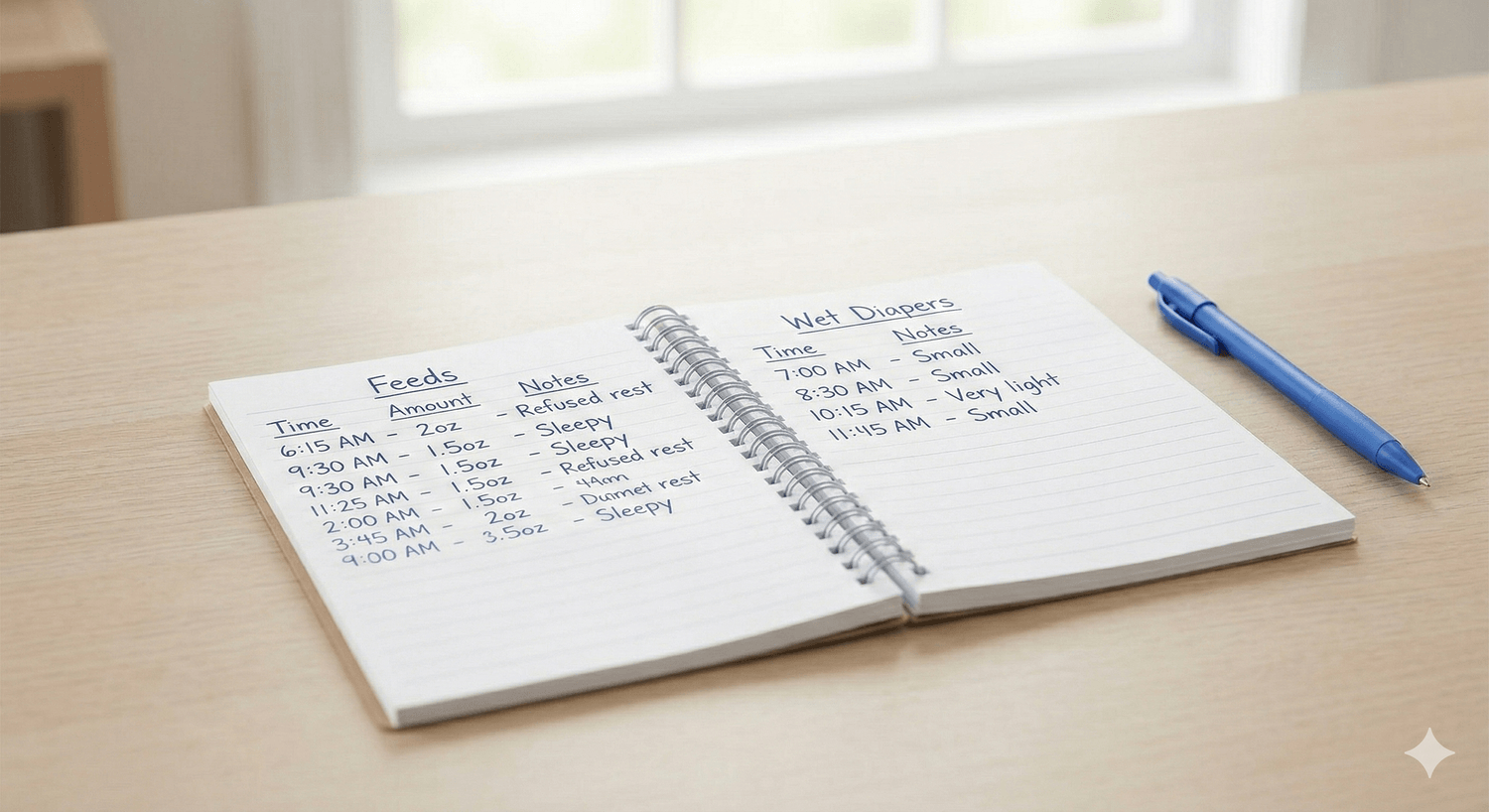
- If your baby is stable but feeding is reduced and diapers are trending down, book a clinic assessment and bring a feeding/diaper log.
Clinic access for families (Beirut • Jounieh • Jbeil/Byblos)
If you are coming from Beirut, Jounieh, or Jbeil/Byblos, bring your feeding notes and diaper count. This makes the visit faster and helps decide the safest next step.
Why “not feeding + fewer wet diapers” matters
Babies can lose fluids quickly when intake drops or vomiting/diarrhea starts. Wet diaper trends help estimate hydration. The earlier you act, the easier it is to correct dehydration and identify the cause.
What to track before you contact your pediatrician
| What to track | Why it matters | What to write down | Bring to clinic |
|---|---|---|---|
| Feeds | Shows intake trend | Breastfeeds (duration/side) or bottle mL per feed + last good feed time | Feeding log + any formula brand (if relevant) |
| Wet diapers | Helps judge hydration | Count in last 6–12 hours and last 24 hours | Diaper timeline (times) |
| Vomiting/diarrhea | Fluid loss risk | How many episodes + timing | Short symptom timeline |
| Temperature | May signal infection | Number + method + time | Photo of thermometer display |
Red flags: go to the ER immediately
- Very sleepy, hard to wake, weak cry, or unusual limpness
- Breathing difficulty (working hard to breathe, pauses, grunting)
- Not keeping fluids down (repeated vomiting) or signs of worsening dehydration
- Very few wet diapers or no clear wet diaper for a long period
- Blue/gray color around lips/face, or your baby looks very unwell
- Fever in a baby under 3 months (rectal ≥ 38.0°C / 100.4°F)
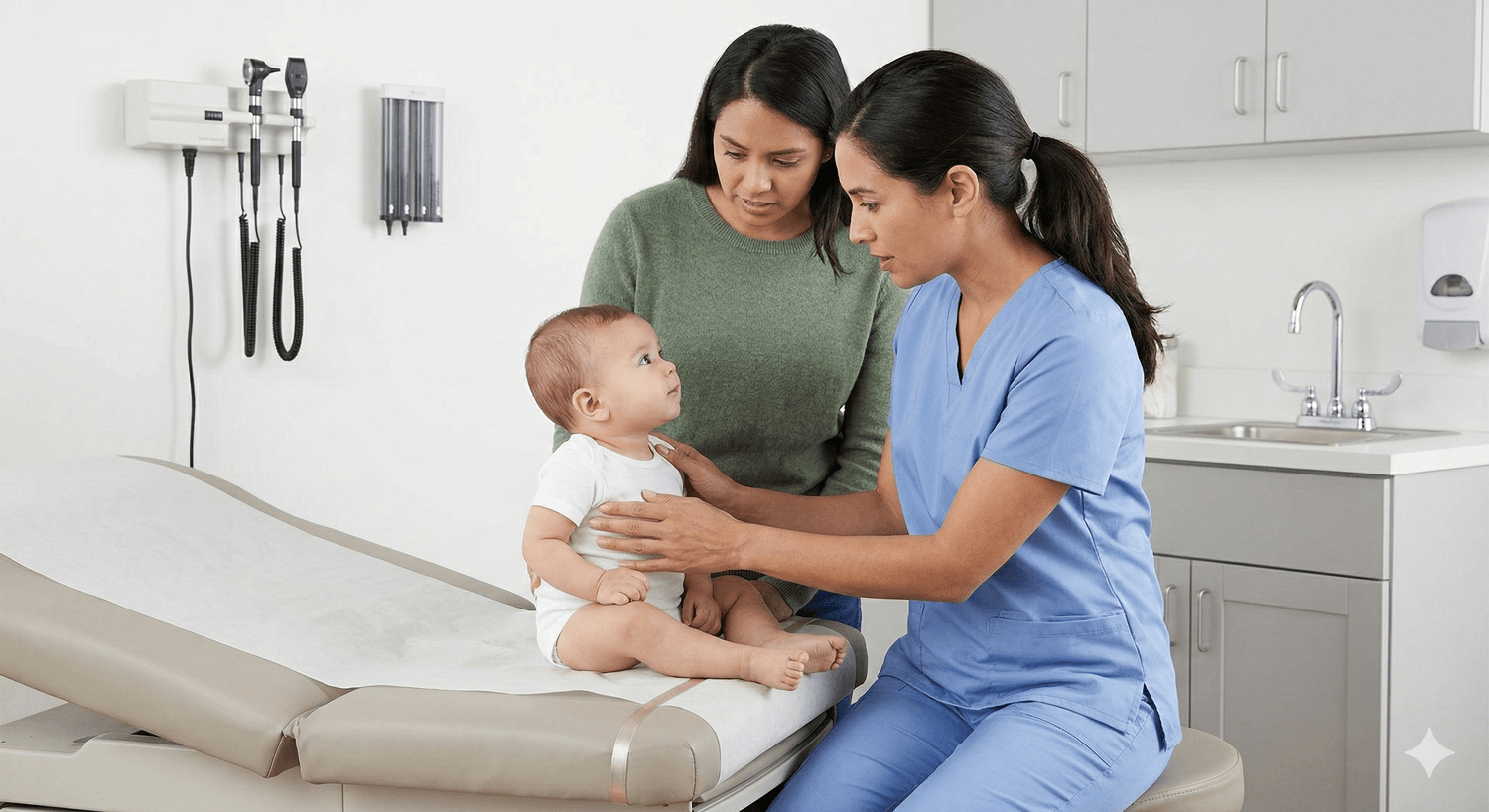
Clinic visit vs ER: what usually makes the difference
| Situation | Best next step | Why | What helps the doctor |
|---|---|---|---|
| Baby is alert, some feeds still happening, diapers slightly reduced | Book a clinic assessment | Early intervention prevents worsening dehydration | Feeding/diaper log, temperature reading |
| Baby looks very unwell, very sleepy, breathing hard, or cannot keep fluids down | Go to ER now | May need urgent evaluation and support | Symptom timeline, last good feed, diaper count |
| Baby under 3 months with fever and reduced feeding | Urgent medical evaluation | Age-based fever pathways often require urgent assessment | Temperature method/time + feeding/diapers |
What you can do while you arrange care
- Keep your baby comfortably dressed (avoid overheating).
- Offer feeds more often in smaller amounts if your baby can feed.
- Track wet diapers and note any vomiting/diarrhea episodes.
- If your baby is under 3 months and has fever, seek urgent evaluation.
Book a pediatric clinic assessment
If your baby is stable but feeding is reduced or diapers are trending down, book a clinic assessment and bring your feeding/diaper log. If red flags are present, go to the ER immediately.
FAQ
How do I know if my baby is dehydrated?
Watch trends: reduced feeding, fewer wet diapers, unusual sleepiness, and signs your baby looks unwell. If your baby has red flags, seek urgent medical evaluation.
When should I go to the ER for poor feeding?
Go urgently if your baby is very sleepy, breathing hard, cannot keep fluids down, looks very unwell, or has very few wet diapers. Fever in a baby under 3 months also needs urgent evaluation.
What should I track before contacting a pediatrician?
Track feeds (breast or bottle amount), wet diapers, vomiting/diarrhea episodes, and temperature (number, method, time).
Can I book a clinic visit for reduced feeding and dehydration concerns?
Yes. If your baby is stable but feeding is reduced and diapers are trending down, a clinic assessment helps clarify the cause and next steps. If red flags exist, go to the ER first.
Do you offer online pediatric consultations for feeding concerns?
Online consultation can help you organize symptoms and decide next steps. If your baby is very unwell or has red flags, urgent in-person evaluation is needed.
Helpful pages
- Booking + contact options
- Online pediatric consultation
- Pediatric clinic in Beirut
- Pediatric clinic in Jounieh
- Pediatric clinic in Jbeil/Byblos
- How to take a baby’s temperature
- Baby weight gain & growth monitoring
- Baby sleep regression
Medically reviewed and written for parents by Dr. Rawan Demachkie (Kids Health Journey Clinic). This page uses trusted pediatric guidance sources.
Dr. Rawan Demachkie online
Follow Dr. Rawan Demachkie for practical pediatric guidance, clinic updates, and parent checklists.
- Instagram: @drrawan.demachkie
- Website: kidshealthjourneyclinic.com
- Blog: Kids Health Journey Clinic Blog
- Booking: Link-in-bio booking page
Get the latest insights from the Pediatrician world.