
Social & Emotional Milestones (0–5) in Lebanon: What’s Normal + Autism Concern Signs | Dr. Rawan Demachkie
Social & Emotional Milestones (0–5) in Lebanon + Autism Concern Signs
If your child avoids eye contact, does not respond to their name, or does not point to show you things, you need clarity. This page explains what social and emotional development often looks like from birth to age 5, what can be normal variation, and what signs should trigger evaluation.
Clinic + online: Beirut, Jounieh, Jbeil/Byblos + online pediatric consultations for Lebanon and abroad.

If you are worried, bring examples: short videos of play, response to name, and pointing.
Fast answers parents search for
- Social development is not only “smiling.” It includes shared attention, gestures, response to name, and back-and-forth interaction.
- One sign alone can be harmless. A pattern over time needs evaluation.
- Autism-specific screening is commonly recommended around 18 and 24 months and earlier if concerns exist.
Social & emotional milestones by age (simple table)
Use this table as a quick reference. Your child does not need to do every item perfectly. What matters is progress, engagement, and interaction across time.
| Age | What you often see | Examples in daily life | If not present |
|---|---|---|---|
| 2–4 months | Social smiles; watches faces | Smiles back; calms with caregiver voice | Discuss at well-child visit |
| 6 months | Responds to familiar people; enjoys interaction | Turns toward caregiver; engages in peek-a-boo | Book if limited engagement over time |
| 9–12 months | Back-and-forth sounds/gestures; shared attention begins | Looks where you point; imitates simple actions | Book if no shared attention/interaction |
| 12–18 months | Points to show you; responds to name; brings objects to share | Shows you toys; follows your attention to objects | Book evaluation; consider screening |
| 2–5 years | Pretend play; peer interaction improves; emotional regulation develops | Role-play games; turn-taking; can be redirected more over time | Book if persistent isolation, rigid play, or major behavior concerns |
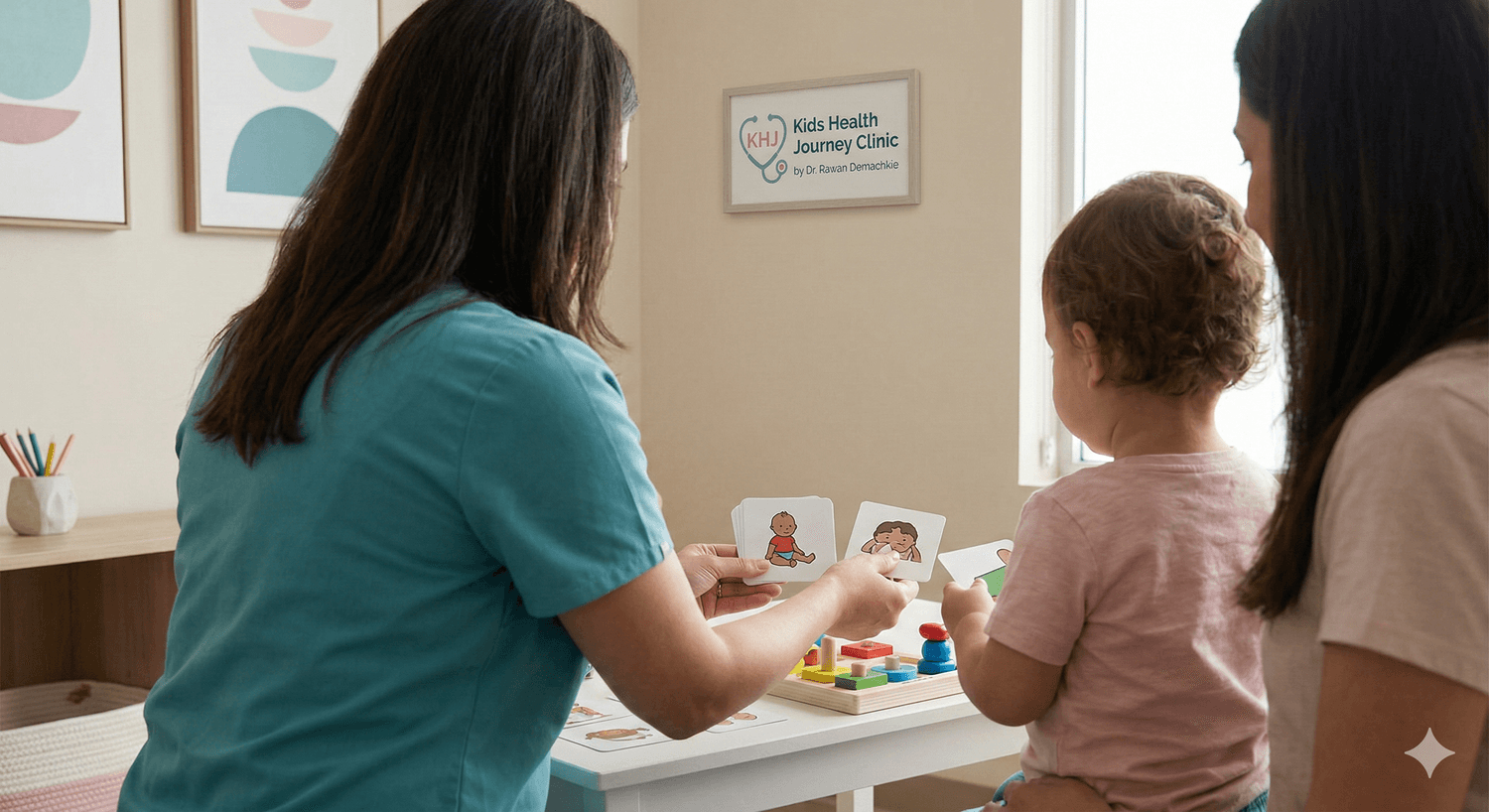
Three skills that matter more than parents realize
1) Response to name
You call your child and they turn, look, or react. If this is inconsistent, the visit should include hearing and social communication review.
2) Pointing to share
Pointing is not only “asking.” It is sharing interest (“look!”). Lack of pointing can be a key sign when combined with other concerns.
3) Joint attention
Your child follows your gaze/point to look at the same thing. Joint attention supports language and social learning.
Autism concern signs (and when you should not wait)
Do not diagnose yourself online. Use red flags to decide whether to book evaluation. A pattern matters more than one isolated behavior.
| You notice | Why it matters | What you do next |
|---|---|---|
| No response to name | Could relate to hearing, attention, or social communication | Book evaluation; include hearing assessment plan |
| No pointing to show interest | Can signal reduced shared attention | Book evaluation; discuss screening |
| Limited eye contact and back-and-forth play | Affects learning through interaction | Book evaluation; bring video examples |
| Loss of language or social skills | Regression needs urgent assessment | Book urgently; do not wait |
If your child looks very unwell, has severe behavior changes, or you notice regression, book urgently. If your child is stable, you can start with an online consultation to review concerns and decide the next step.

What happens during a social-development consultation
1) History
We review milestones, family concerns, nursery feedback, sleep, and daily routines.
2) Observation
We observe play, response to name, gestures, shared attention, and interaction patterns.
3) Plan
You leave with clear steps: screening plan, referrals if needed, and follow-up timing.
Book a developmental evaluation
Book a clinic visit in Beirut, Jounieh, or Jbeil/Byblos, or start with an online pediatric consultation to review concerns and plan next steps.
FAQ: Social milestones and autism concern signs
My child avoids eye contact. Is it always autism?
No. Eye contact varies, and stress or temperament can affect it. A pattern with other signs like limited gestures, poor response to name, and reduced shared attention needs evaluation.
What does “joint attention” mean?
It means your child shares focus with you (follows your gaze or pointing). It supports language and social learning.
When is autism screening recommended?
Autism-specific screening is commonly recommended around 18 and 24 months and earlier if concerns exist.
My toddler does not respond to their name. What should I do?
Book an evaluation. The plan often includes reviewing interaction patterns and considering hearing assessment depending on the full picture.
Can I start with an online pediatric consultation for these concerns?
Yes. Online consultation helps organize concerns and review videos. If an in-person exam is needed, you will get clear instructions on when to come in.
Helpful pages
Medical review note: This page is written and medically reviewed by Dr. Rawan Demachkie for Kids Health Journey Clinic to help parents understand social-emotional milestones and decide when to book evaluation. It does not replace urgent medical evaluation when a child appears very unwell or when there is regression.
Get the latest insights from the Pediatrician world.